
Coastal Interiors Trends That Feel Timeless
Published:
Coastal interiors trends are shifting toward warmer woods, layered stone, tailored storage, and durable finishes designed for refined Florida homes today.
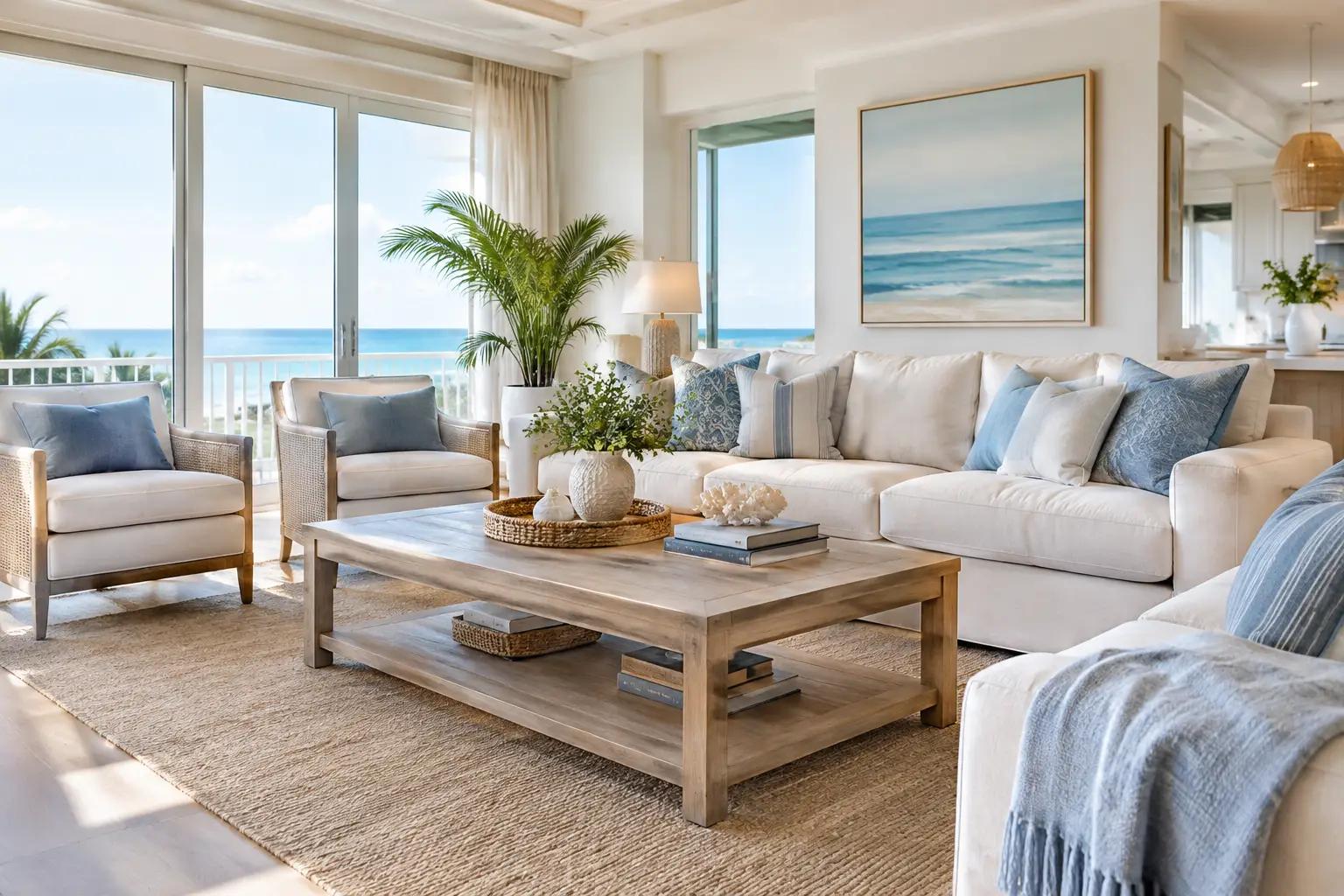
A coastal home should feel connected to its setting without looking like a themed vacation rental. The most enduring coastal interiors trends move beyond obvious shells, anchors, and stark blue-and-white palettes. Instead, they bring in sun-washed color, natural materials, tailored millwork, and finishes that stand up beautifully to daily life in a warm, humid climate.
For homeowners planning a kitchen remodel, bathroom renovation, or complete interior update, the goal is not to copy a showroom. It is to create a home with a relaxed sense of place, refined materials, and practical details that will still feel considered years from now.
Why Coastal Interiors Are Becoming More Refined
The coastal look has matured. Clean white rooms and pale gray flooring once dominated the category, but many homeowners now want more warmth, depth, and individuality. A home near the water can be light and airy without feeling cold, and a neutral palette can be layered without becoming busy.
This shift is especially relevant in Broward and Palm Beach County homes, where strong daylight, open living areas, and indoor-outdoor views often influence every design decision. Materials need to look elevated in bright sun, but they also need to handle sand, moisture, guests, pets, and everyday use. The best choices balance visual softness with real performance.
Coastal Interiors Trends for Kitchens and Living Spaces
Warm woods replace the all-white look
White cabinetry remains a classic option, particularly in smaller kitchens where brightness matters. But warmer wood tones are taking a larger role in coastal interiors. Think white oak, light walnut, rift-cut oak, and wood finishes with a natural matte appearance rather than a heavy stain or glossy sheen.
A full wood kitchen can be striking, but it is not the only answer. Many successful designs pair warm wood lower cabinets or an island with softly painted perimeter cabinetry. This approach adds contrast while keeping the room open. In a large kitchen, a wood-clad island can also make the space feel more like furniture and less like a bank of cabinets.
The detail matters as much as the color. Flat-panel or slim Shaker doors, integrated pulls, and carefully proportioned hardware tend to feel more current than ornate profiles. Custom cabinetry also creates an opportunity to solve everyday storage issues with appliance garages, pantry pullouts, concealed charging drawers, and built-in beverage areas.
Stone is being used with more character
Bright white countertops are still widely requested, but homeowners are increasingly drawn to stone with movement, warmth, and subtle veining. Creamy quartzites, honed natural stones, and porcelain slabs that resemble limestone or marble can bring visual depth without overwhelming a room.
A waterfall island may suit a sleek contemporary home, while a more traditional coastal kitchen may benefit from a stone edge with a softer profile. The right choice depends on the home’s architecture and how the kitchen will be used. Natural stone offers one-of-a-kind beauty, but it requires appropriate care. High-quality quartz and porcelain can be a better fit for families who want a more forgiving surface with less maintenance.
Rather than treating the backsplash as an afterthought, consider carrying the counter material up the wall behind the range or using handmade-look tile in a soft neutral tone. Both approaches can create a finished, custom appearance. The important distinction is restraint: one strong surface often has more impact than several competing ones.
Texture is doing more of the design work
Coastal rooms do not need to rely on color alone. Texture adds the visual interest that makes a neutral interior feel complete. Plaster-inspired walls, reeded wood panels, woven accents, linen-look upholstery, and tactile ceramic tile introduce dimension while preserving a calm atmosphere.
In living rooms, custom media walls are becoming a practical way to bring this idea into the home. A carefully designed wall can integrate the television, storage, lighting, and a stone or wood feature without making the room feel dominated by electronics. For homes with open floor plans, this type of architectural detail helps establish a focal point and gives the main living space a more intentional finish.
Coastal Bathroom Trends With Staying Power
Spa-like does not have to mean stark
The most inviting coastal bathrooms feel quiet and comfortable, not clinical. Warm whites, sand tones, muted greens, and pale blue-gray accents are replacing the cooler, high-contrast schemes that can make a bath feel dated quickly. Large-format tile with a limestone or travertine appearance is particularly well suited to this direction.
A floating vanity in white oak or a painted soft taupe can introduce warmth below a light stone counter. Brushed nickel, satin brass, and bronze-toned fixtures each work well, although mixing too many metal finishes in one room can look unplanned. Choose one dominant finish and repeat it thoughtfully in the faucet, shower trim, lighting, and hardware.
Walk-in showers remain a priority, but their success comes down to construction details. Proper waterproofing, tile layout, drainage, niche placement, and glass proportions all affect how the finished bathroom looks and performs. A beautiful tile selection cannot compensate for poor preparation behind the wall.
Curves soften hard surfaces
Arched mirrors, rounded sconces, curved shower entries, and gently shaped freestanding tubs are appearing more often in coastal bath design. These forms can soften the straight lines of tile, cabinetry, and glass. They work best when used selectively. One curved mirror or a rounded vanity detail may be enough to make the room feel more welcoming.
For a more tailored result, pair those softer forms with practical storage. Recessed medicine cabinets, linen cabinetry, drawer organizers, and a well-designed vanity keep the calm look from being undermined by countertop clutter.
Flooring and Paint Should Support the Whole Home
Flooring has a major influence on whether a coastal interior feels cohesive. Wide-plank engineered wood in natural oak tones remains a strong choice for primary living areas, while large-format porcelain tile offers excellent durability and easy care. The best option depends on the home, the subfloor, maintenance expectations, and the desired level of warmth underfoot.
Very cool gray flooring can make a sun-filled home feel flat. Warmer beige, light oak, mushroom, and sandy taupe tones tend to work better with current coastal palettes. They also give homeowners more flexibility with furnishings and paint colors over time.
Paint is moving in the same direction. Crisp white walls still have a place, especially where ceilings are lower or natural light is limited. Yet softer whites with creamy or mineral undertones often feel more comfortable in a coastal setting. In larger homes, a restrained palette of related neutrals can create transition from room to room without every space feeling identical.
Lighting Is Becoming More Layered and Personal
Good coastal design should look just as inviting after sunset as it does at noon. That requires more than a central ceiling fixture. Recessed lighting provides general illumination, while pendants, sconces, under-cabinet lighting, and accent lighting add depth and make the home easier to use.
In kitchens, pendants over an island can add personality, but their scale must suit the room. Oversized fixtures may obstruct sightlines in an open plan, while undersized fixtures can disappear. In bathrooms, decorative sconces placed near the mirror usually provide a more flattering and functional light than relying only on overhead fixtures.
Natural materials such as woven shades, ceramic lamps, aged metal, and linen-like shades can complement a coastal home without looking overly casual. A light fixture should feel connected to the architecture and finishes around it, not like a separate decorative statement.
How to Keep Coastal Interiors From Looking Too Trend-Driven
The most reliable approach is to use trends in the layers that are easier to update, while keeping permanent elements grounded in quality and proportion. Cabinetry, flooring, tile installation, plumbing placement, and lighting plans deserve careful consideration because changing them later involves significant work. Decorative pillows, artwork, stools, and smaller fixtures can carry more of the seasonal personality.
It also helps to begin with the home itself. A contemporary condo may call for streamlined cabinetry, porcelain slabs, and clean architectural lighting. An established suburban home may benefit from more traditional millwork, warmer flooring, and subtle textural details. There is no single formula for a coastal interior, even within the same neighborhood.
At Property Solutions FL LLC, the design-and-build process begins by looking at how the home is used, what needs to improve, and which materials will support the desired result. A coordinated plan across cabinetry, flooring, paint, plumbing, electrical work, and finish selections helps prevent the fragmented look that can happen when each decision is made separately.
A well-designed coastal home should feel easy to live in, not overly styled for a photograph. Choose materials you enjoy touching, colors that respond well to your natural light, and craftsmanship that gives every room a sense of permanence. That is what turns a passing trend into a home that continues to feel right.
Let's Talk About Your Project
Tell us what you have in mind and book your private design consultation. We will visit your property and prepare a proposal tailored to your home.
Book a Private Design ConsultationComplimentary Private Design Consultation. Limited to 15 consultations per month in Broward & Palm Beach County.
Offer terms